Father's Day, or Dia dos Pais, is observed on the second Sunday of August in Brazil, honouring fathers and father figures with gifts, cards, and family gatherings. It is a cultural rather than a public holiday, and is generally observed with similar commercial emphasis to Mother's Day, though typically with somewhat lower retail spending. Family barbecues and shared meals are common ways of marking the day.

Public Holidays & Cultural Festivals in Brazil 2026
Discover the official 2026 public holiday calendar for Brazil. Plan your vacations, Carnival celebrations, and business schedules with our complete guide to Brazilian national and regional holidays.
Public Holidays & Observances List
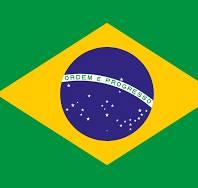
Independence Day, or Dia da Independência, is a nationwide public holiday observed on September 7th, commemorating Brazil's declaration of independence from Portugal in 1822. Military parades take place in cities across the country, with the largest and most prominent held in Brasília, attended by the President and senior government officials. Streets are often decorated in green and yellow, the colours of the Brazilian flag.
- Watching military parades held in Brasília and other major cities, broadcast on national television
- Decorating streets, homes, and vehicles in green and yellow, the colours of the Brazilian flag
Tree Day is observed on September 21st in Brazil, coinciding with the arrival of spring in the southern hemisphere, and is dedicated to raising awareness of environmental conservation and the importance of trees and forests. Schools often hold tree-planting activities and educational programs about Brazil's ecosystems, including the Amazon rainforest. It is not a public holiday.
Our Lady of Aparecida Day is a nationwide public holiday observed on October 12th, honouring Our Lady of Aparecida, the patron saint of Brazil, whose shrine in Aparecida, São Paulo state, is one of the largest pilgrimage sites and Marian basilicas in the world. Millions of pilgrims travel to the Basílica de Nossa Senhora Aparecida throughout the year, with particularly large crowds gathering on this date. The day reflects the deep Catholic devotion that remains a significant part of Brazilian religious life.
- Making a pilgrimage to the Basílica de Nossa Senhora Aparecida, one of the largest Marian shrines in the world
- Attending special Masses held in churches across the country honouring Brazil's patron saint
Children's Day, or Dia das Crianças, is observed on October 12th in Brazil, coinciding with Our Lady of Aparecida Day, and is dedicated to celebrating children with gifts, family outings, and special activities. It is one of the busiest retail periods of the year after Christmas and Mother's Day, with toy sales spiking significantly in the weeks leading up to it. It is not itself a separate public holiday, riding instead on the same date as the religious observance.
Halloween is observed on October 31st in Brazil and has grown in popularity in recent decades, particularly in larger cities and among younger generations, despite having no traditional roots in Brazilian culture. Costume parties and themed events at bars, clubs, and schools have become increasingly common. It is not a public holiday.
All Souls' Day, or Dia de Todos os Fiéis Defuntos (commonly referred to as Dia dos Mortos), is a nationwide public holiday observed on November 2nd, dedicated to honouring and remembering deceased loved ones. Families visit cemeteries to clean graves, lay flowers, and offer prayers for the departed. Shops, banks, and most businesses close nationwide.
- Visiting cemeteries to clean family graves and lay flowers in remembrance of deceased relatives
- Attending special Masses held in honour of the deceased in churches across the country
Republic Proclamation Day, or Dia da Proclamação da República, is a nationwide public holiday observed on November 15th, commemorating the 1889 proclamation that ended the Brazilian monarchy and established the country as a republic. Civic ceremonies and flag-raising events are held in cities across the country, with particular significance in Rio de Janeiro, the former imperial capital. Schools hold educational programs reflecting on this pivotal moment in Brazilian history.
- Attending civic ceremonies and flag-raising events held in cities nationwide
- Reflecting on the historical transition from monarchy to republic, particularly significant in Rio de Janeiro
Black Awareness Day, or Dia da Consciência Negra, is a nationwide public holiday observed on November 20th, marking the anniversary of the death of Zumbi dos Palmares, the last leader of the Quilombo dos Palmares, a community of escaped enslaved people that resisted Portuguese colonial forces for nearly a century. The day is dedicated to recognising the contributions and resilience of Afro-Brazilian culture and addressing ongoing racial inequality in Brazilian society. Cultural events, including capoeira demonstrations, music, and educational programs, are held nationwide.
- Attending cultural events and capoeira demonstrations celebrating Afro-Brazilian heritage
- Participating in educational programs and public discussions addressing racial equality and historical memory
Christmas Eve, or Véspera de Natal, falls on December 24th and is considered by many Brazilians to be the centrepiece of the Christmas season, with the main family gathering and festive dinner, known as Ceia de Natal, typically held that evening. Many families exchange gifts at midnight after the meal, and dishes often include roast turkey, ham, and traditional Portuguese-influenced desserts. It is not a full statutory public holiday, though most businesses close early in the afternoon.
Christmas Day, or Natal, is a nationwide public holiday observed on December 25th, marking the Christian celebration of the birth of Jesus Christ. Since the main festive meal typically takes place the evening before during Ceia de Natal, Christmas Day itself is usually spent quietly with family, often continuing the celebration with a relaxed lunch and leftovers. Shops, banks, and most businesses are closed nationwide.
- Sharing a relaxed Christmas Day lunch, often featuring leftovers from the previous night's Ceia de Natal
- Spending the day with extended family, often at the beach given Brazil's warm Southern Hemisphere Christmas climate
New Year's Eve, or Véspera de Ano Novo or Réveillon, falls on December 31st and is celebrated across Brazil with large public gatherings, fireworks, and beach celebrations, with Copacabana Beach in Rio de Janeiro hosting one of the largest New Year's Eve parties in the world. Wearing white and the tradition of jumping seven waves are widely practised the same evening as the main celebration. It is not a public holiday, though many businesses close early in the afternoon ahead of the evening's festivities.
- Attending beach fireworks celebrations, most famously along Copacabana Beach in Rio de Janeiro
- Wearing white and jumping seven ocean waves at midnight, a tradition believed to bring luck for the new year
Complete Brazil National Holiday and Optional Day Calendar for 2026
Brazil's holiday calendar blends a clear set of nationwide public holidays with regional dates, religious observances, and a distinctive system of optional working days that businesses and individuals navigate differently depending on local government decree. Whether you are running a business with operations across multiple Brazilian states, planning travel around Carnival, or scheduling around the country's many festive dates, understanding how each one is classified for 2026 makes a real difference. This guide covers every national and regional holiday in Brazil for 2026, with the context needed to plan around them confidently.
National Public Holidays vs. Optional Days (Pontos Facultativos) in Brazil
Brazil observes a core set of nationwide public holidays fixed by federal law, including New Year's Day, Good Friday, Easter Sunday, Tiradentes Day, Labour Day, Independence Day, Our Lady of Aparecida Day, All Souls' Day, Republic Proclamation Day, Black Awareness Day, and Christmas Day. On these dates, banks, schools, and most businesses close nationwide.
Alongside these fixed holidays, Brazil has a distinctive category known as "ponto facultativo," or optional point, referring to days that municipal or state governments may choose to declare as non-working, even though they aren't mandated as holidays nationally. Corpus Christi is a classic example, frequently declared a ponto facultativo in many cities but not legally a fixed public holiday everywhere. Carnival Monday and Tuesday follow a similar pattern: while not official public holidays under federal law, the vast majority of Brazilian municipalities declare them as pontos facultativos each year, effectively shutting down the country for several days. Businesses operating in 2026 should check each municipality's specific decree, since practical closures often extend well beyond the legally mandated holiday list.
Carnival and Long Weekends in 2026
Carnival is, practically speaking, Brazil's most disruptive holiday period each year, with many businesses, schools, and services closing from the Friday before Ash Wednesday through the following Wednesday itself. The exact dates shift each year based on the Easter calendar, so confirming Brazil's Carnival window for 2026 early is essential for travel and business planning. Beyond Carnival, several fixed holidays, including Tiradentes Day and Independence Day, frequently create extended weekends depending on which day of the week they fall on in 2026.
Plan Ahead with the Printable PDF Calendar
A printable PDF version of the 2026 Brazil holiday calendar is a useful tool for tracking national holidays, regional dates like São Paulo's Constitutionalist Revolution Day, and the all-important Carnival period. Having everything mapped out in one place makes planning around Brazil's rich and varied calendar far more manageable. Download our free printable 2026 Brazil holiday calendar to keep every public holiday, optional day, and major festival organised throughout the year.